
Exceptional: Reflections on Graduation, Belonging and Community
After twenty-five years in America, a British immigrant in Beavercreek reflects on his son’s graduation, community, and what it truly means to belong.
A British immigrant reflects on graduation, belonging, and community
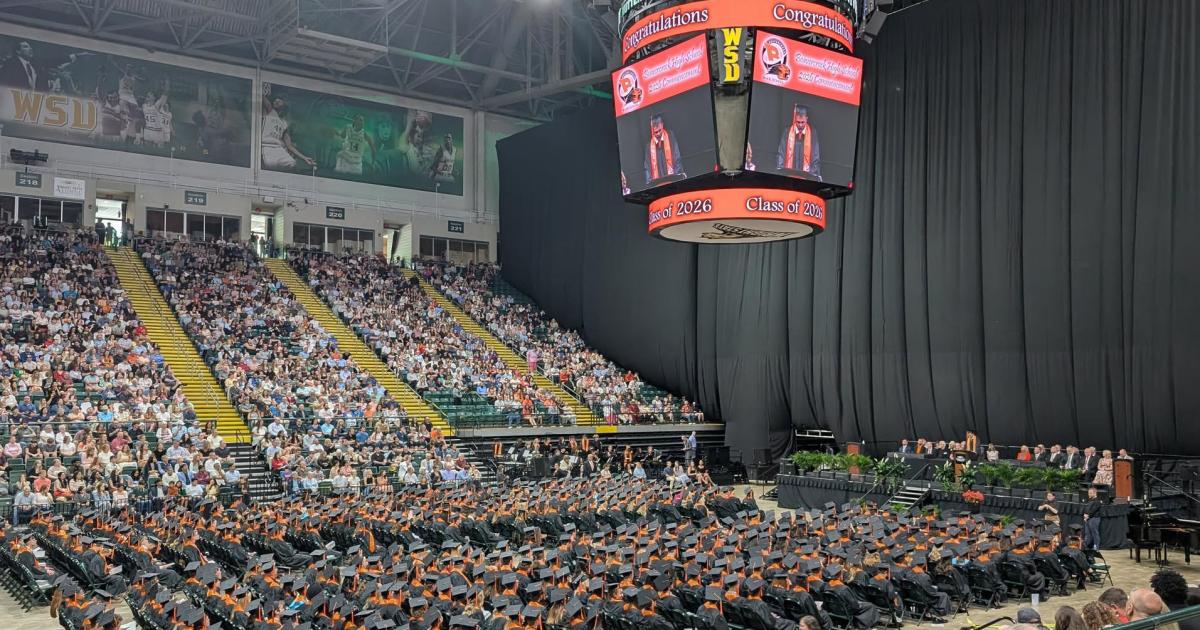
The Beavercreek High School Choir had just performed one of the most beautiful a cappella renditions of the National Anthem I’d ever heard. For a brief moment, the arena remained completely silent before the crowd erupted into applause.
There are moments in life that stay with you. Your wedding day. The birth of a child. The loss of a loved one. The phone call that changes everything. They can stir up emotions without warning, in a conversation with a friend, in the middle of a grocery store, or walking alone on a quiet trail in the woods.
My oldest son’s high school graduation ceremony this past weekend was one of these moments.
The parking lot at the Nutter Center began filling up an hour before the event. The arena was full of families anxiously awaiting the arrival of the students. As the Class of 2026 began filing into the arena for the processional, the crowd began to clap and cheer.
The moment I finally caught sight of my son, I felt my composure begin to slip. He looked characteristically calm, completely unflappable, confidently walking toward the next chapter of his life. Watching him, I was so incredibly proud, grateful, and unexpectedly emotional. My youngest son noticed and put his arm around my shoulders. I turned toward my wife, and the three of us shared a brief group hug. Very American.
Surprisingly familiar was the choice of music as graduates entered the arena: Edward Elgar’s Pomp and Circumstance, a piece so deeply associated with ceremonial tradition in Britain that hearing it at my American son’s graduation carried an emotional resonance I appreciated. As he took his seat and turned around to try to spot us, his entire life flashed before my eyes.
I recalled the day we drove home from the hospital, the weight of love for this helpless little boy asleep in his baby carrier. I’ve never driven so carefully, before or since. His first steps. Punching the waves on the Gulf Coast as a three-year-old. Crushing me at chess the night before, continuing a trend I deeply regret encouraging.
The district superintendent captured it perfectly. At some point in your journey as a parent, he suggested, you begin to understand what a privilege it is to be one. Families around me quietly laughed in agreement.
The high school principal reminded the graduates that no matter where they ended up, this would always be their home. She implied “home” isn’t somewhere you come from, it’s something you create with others. This mirrored the theme of the entire event. There was recognition for parents, teachers, and support staff. Each group received a warm round of applause in appreciation for all those who had helped the graduates reach this moment.
There was also a special recognition for active-duty military members, veterans, and those students entering military service, an especially meaningful gesture for our local military community.
Watching my son cross the stage to receive his diploma, I found myself unexpectedly moved not just as a father, but as an immigrant.
The woman sitting next to my wife cheered loudly for him as he exited the stage. As we turned, she smiled. “I’ve got your back,” she said.
Filled with anticipation, pride, and unapologetic emotion, the high school graduation experience feels distinctly American. In Britain, ceremonies like this are usually reserved for university graduations. Secondary school rarely carries this kind of communal ritual or emotional weight.
But graduations like this do not emerge accidentally. They are the visible culmination of years of communal investment: teachers staying late after school, coaches giving up weekends, parents driving children to practices and rehearsals, volunteers working concession stands, neighbors showing up for children who are not their own.
Local businesses sponsor programs. Restaurants organize fundraiser nights and donate portions of their profits. Over time, the entire community becomes invested in the success of its young people.
My son spent much of his senior year representing his school in the National Cyber League, a cybersecurity competition involving more than seventeen thousand high school students nationwide. When he finished thirteenth in North America, the entire family celebrated, but so did teachers, mentors, classmates, and friends who had encouraged him along the way. Mr. Staub, his cybersecurity teacher, recognized him for almost ten whole minutes at a recent Board of Education meeting.
Two of my nieces have both been part of the BHS music program. One played trombone and later served as drum major (conductor) in the marching band. The other plays saxophone. Every year, Beavercreek hosts “Weekend of Jazz,” a nationally recognized event that brings together student musicians, professional performers, volunteers, families, and educators from across the region. Professional, world-class musicians spend the weekend mentoring students before performing a concert for the community itself.
The concept of extracurricular activities is not foreign to me—Britain has them. But my experience of American community involvement is exceptional in ways that still catch me off guard. It’s not just the sheer variety of programs on offer, though that’s remarkable in itself. It’s the quality, the commitment of those involved, and the willingness of adults to volunteer their time, energy, and money for the benefit of the kids.
In Britain, outside of church, I rarely witnessed this level of organized communal investment in young people. In Beavercreek, I see it constantly. Students who instinctively lift each other up. Parents who cheer on the entire group, not just their own child. Teachers who go above and beyond because they believe in what they’re building.
Over the years, I’ve also observed this same kind of community spirit outside of the school environment and in the wider Dayton area. In spades.
My youngest son recently became interested in competitive arm wrestling and began training with a group at a local gym. Most of the men are older and far more experienced than he is, yet they immediately took him under their wing — encouraging him, teaching him, treating him as one of their own.
Through my business, I’ve spent years working alongside local nonprofits, arts organizations, volunteer groups, cultural organizations, and educational initiatives. Again and again, I watched countless ordinary people devote enormous amounts of time and energy to causes that would never make headlines.
One friend I’ve had the honor of working with for over twenty years, Dan Feldkamp, spent sixteen years riding and coaching, raising thousands of dollars for JDRF, now operating globally as Breakthrough T1D, despite initially having no immediate family connection to type 1 diabetes. Over the years, all of his children became involved as well.
What struck me over the years was not that everyone shared the same beliefs, politics, or backgrounds. They clearly didn’t. What they shared was passion, commitment, and a willingness to show up. Parents helped out. Local businesses donated. Volunteers gave their time freely simply because they wanted to contribute. People invested themselves in the lives of children they barely knew simply because they belonged to the same community.
Watching families celebrate in the parking lot afterward, it became clear that the graduation ceremony was only the visible tip of something much larger: years of teachers, parents, coaches, volunteers, sponsors, and mentors choosing to invest in children. Mine among them.
I don’t know the name of the lady who sat next to my wife, but when she said, “I’ve got your back,” it wasn’t surprising; it was completely genuine.
Exceptional.
My children have grown up in this community. This is not simply where we live. It is home. Not because we were born here, but because, over time, we have built a life here with others.
In a time when communities can easily constrain and divide us, this graduation was a powerful reminder to me of just how profoundly they can sustain us.
Christopher James is a British-born writer, business owner, and naturalized American citizen living in Beavercreek, Ohio. He is the owner and publisher of DaytonLocal.com. More of his personal writing can be found at Sliding Forward on Substack.